Art-and-Economics - When Aesthetics Meet Economics: From the Bloomsbury Group to Mexico’s Subversive Model

Updated: Jul 30
28/7/2026
In the early 1900s, London’s Bloomsbury district became the epicenter of a quiet yet radical revolution. A collective of creators, including prominent figures such as author Virginia Woolf, economist John Maynard Keynes, and visual artists and art critics Vanessa Bell, Duncan Grant, Roger Fry, and Clive Bell, set out to break free from the shackles of conservative Victorian academicism (Crancao 2013), proving that paintings and national budgets can be inextricably linked.
1. Bloomsbury’s Aesthetic Disruption
The group’s contribution to Art History was profound, fundamentally shifting how the public perceived creative production:
The Introduction of Modernism: Roger Fry coined the term "Post-Impressionism" and organized the landmark exhibitions of 1910 and 1912 in London, introducing the British public to the works of Cézanne, Matisse, and Picasso (Fry 1912). It provoked immense shock, but also became a vital source of new inspiration.
The Theory of "Significant Form": Clive Bell (1914) formulated a revolutionary theory, arguing that the value of a work of art does not lie in the faithful representation of reality, but in the emotional aesthetic emotion provoked by lines and colors, laying the groundwork for modern abstraction.
Art in Everyday Life: Through the Omega Workshops, Vanessa Bell and Duncan Grant channeled this avant-garde aesthetic into functional everyday objects (furniture, textiles, ceramics), effectively blurring the boundaries between "fine" and "decorative" arts (Courtauld Gallery 2009).
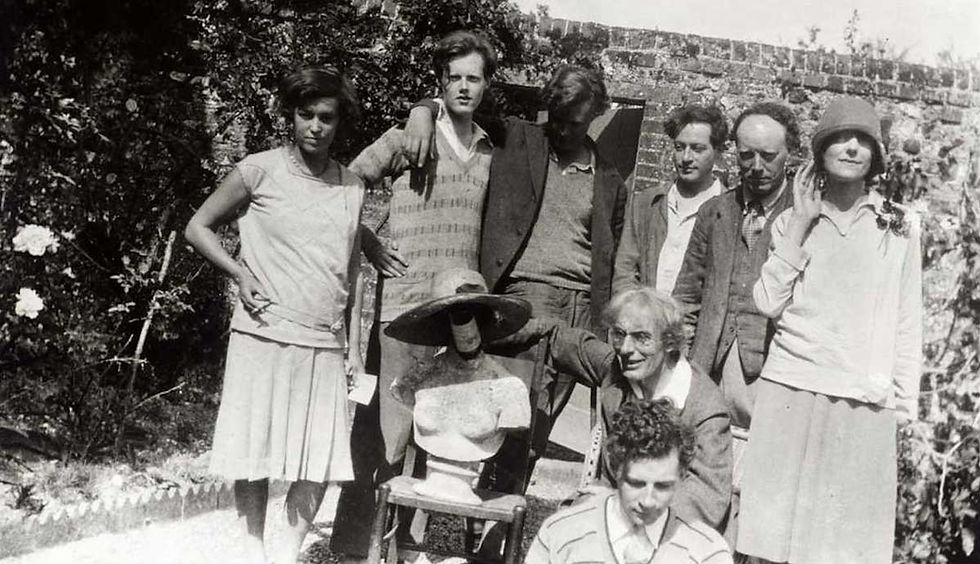
“By far the most valuable things, which we can know or can imagine, are certain states of consciousness, which may be roughly described as the pleasures of human intercourse and the enjoyment of beautiful objects.” ~ G. E. Moore, Principia Ethica (1903)
This quote from the Group's philosophical "bible" became the bridge for aesthetics to cross over into the realm of political economy.
2. John Maynard Keynes: Art as an Economic Catalyst
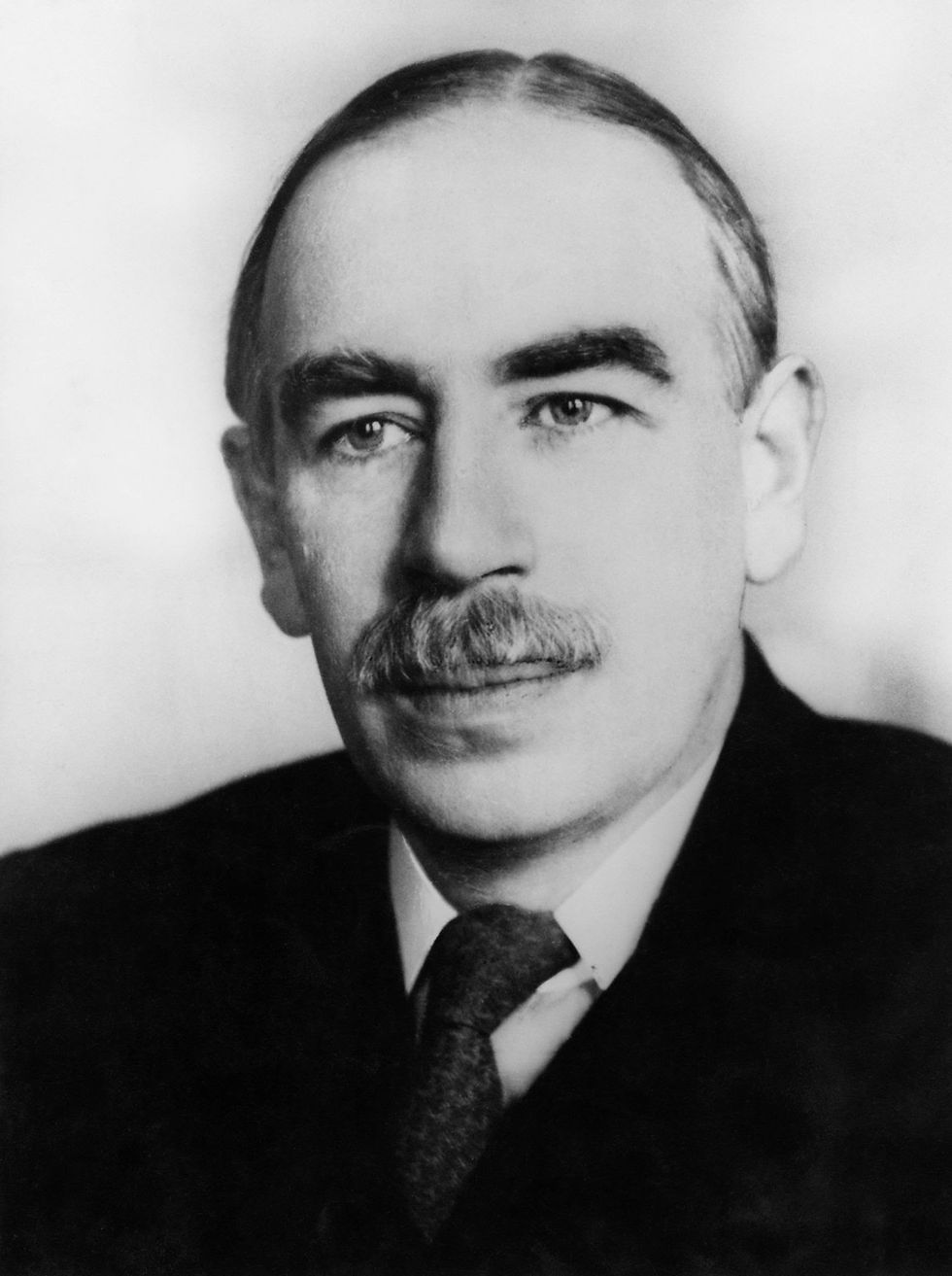
The true uniqueness of Bloomsbury, however, lies in the fact that one of its core members was John Maynard Keynes, the man who reshaped modern macroeconomic theory. Deeply influenced by G.E. Moore’s philosophy (1903), Keynes did not view economics as a cold end in itself, but rather as a means to an end.
Keynes argued that the true goal of economic prosperity is to liberate humanity from the drudgery of survival, allowing individuals to dedicate themselves to culture and the spirit (Keynes 1930). As an architect of economic policy, he put this theory into practice by founding the Arts Council of Great Britain in 1946, institutionalizing state subsidies for the arts using public funds for the very first time (Upchurch 2004).
3. The Ultimate Application: Mexico’s Pago en Especie Program
While the Keynesian logic of state support was implemented in large-scale programs, such as the US New Deal in the 1930s, where the federal government employed thousands of out-of-work artists to create public works (Harris 1995), the purest, most poetic, and literal application of this school of thought occurred in Mexico.
In 1957, Mexico institutionalized the pioneering Pago en Especie (Payment in Kind) program (Secretaría de Hacienda y Crédito Público 2020). The logic behind the initiative is simple yet ingenious: artists have the option to pay their income tax not with money, but directly with their own artwork.
This policy created a unique triple benefit:
For the Artist: It ensures the financial sustainability of creators without liquidity pressures, recognizing artistic production as valid economic tender.
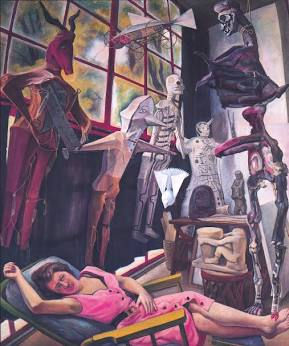
For the State: The Mexican government built a priceless national collection of contemporary art, featuring masterpieces by leading creators such as Diego Rivera, David Alfaro Siqueiros, and Rufino Tamayo (Deffebach 2015).
For Society: The state does not lock these works away in dark vaults. It places them in public buildings, government offices, museums, and public squares, making art a shared heritage for every citizen.
A Lesson for Today
The Bloomsbury Group and the Mexican paradigm remind us of something that modern, technocratic economics tends to forget:
art is not a luxury reserved for times of abundance, but a structural pillar of a healthy society.
When the state treats culture as an investment and an alternative form of wealth, economics gains a human face, and art is democratized, stepping out of elite galleries and into the public sphere.
References
Bell, C., 1914. Art. London: Chatto & Windus.
Courtauld Gallery, 2009. Beyond Bloomsbury: Designs of the Omega Workshops 1913-1919. London: Courtauld Gallery.
Crancao, G., 2013. The Bloomsbury Group: Art, Life and Commodity. Journal of Modernist Studies, 5(2), pp. 45-62.
Deffebach, N., 2015. María Izquierdo and Frida Kahlo: Challenging Visions in Modern Mexican Art. Austin: University of Texas Press.
Fry, R., 1912. The Second Post-Impressionist Exhibition: Catalogue. London: Ballantyne Press.
Harris, J., 1995. Federal Art and National Culture: The Politics of Identity in New Deal America. Cambridge: Cambridge University Press.
Keynes, J.M., 1930. Economic Possibilities for our Grandchildren. Στο: Essays in Persuasion. London: Macmillan, pp. 358-373.
Moore, G.E., 1903. Principia Ethica. Cambridge: Cambridge University Press.
Secretaría de Hacienda y Crédito Público, 2020. Programa Pago en Especie: Historia y Acervo. Ciudad de México: SHCP.
Upchurch, A., 2004. John Maynard Keynes, the Bloomsbury Group and the origins of the Arts Council of Great Britain. International Journal of Cultural Policy, 10(2), pp. 203-217.


Comments